Ladies and gentlemen, welcome to the Orient Express . . .
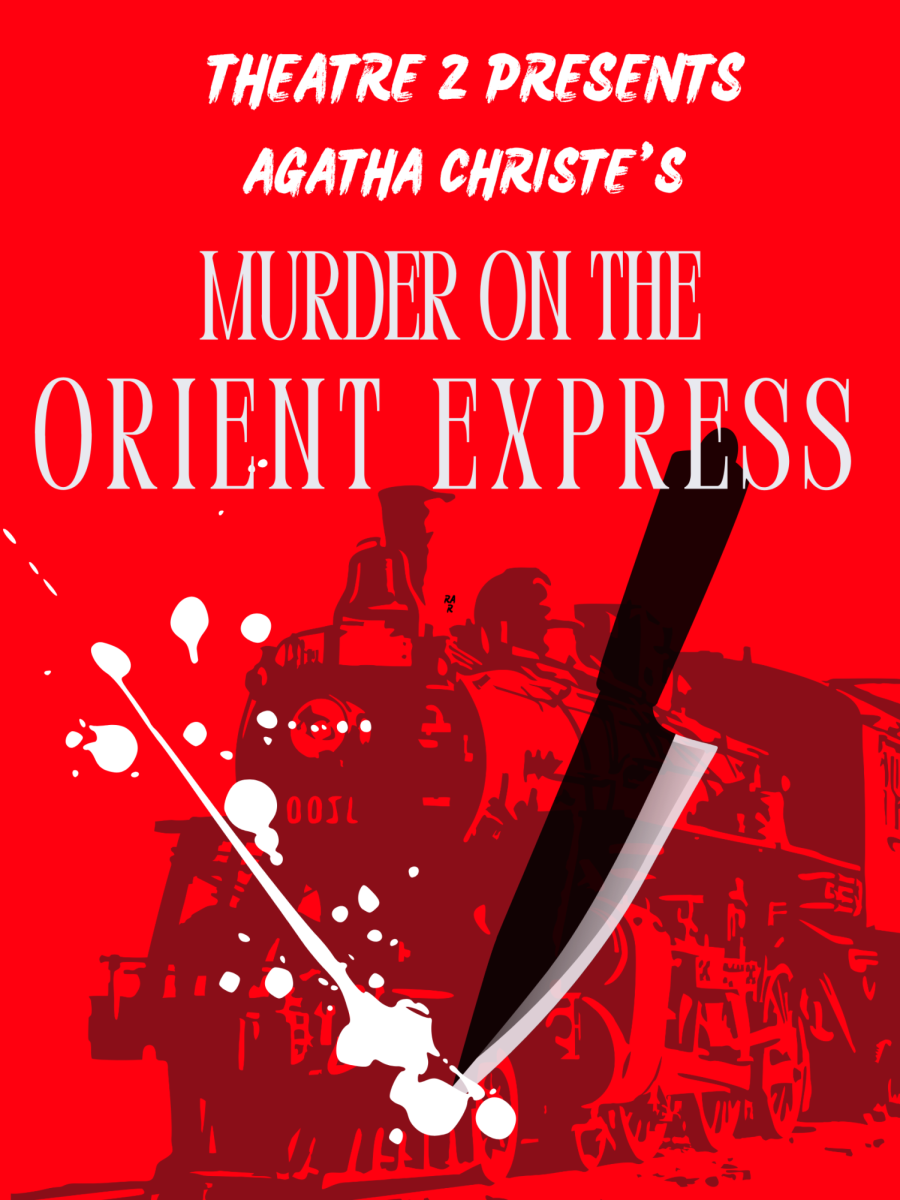
Ken Ludwig’s adaptation of Agatha Christie’s Murder on the Orient Express was brought to life by West Ranch’s very own Theater 2 on January 29th, 30th and 31st . Suspense, humor and glamour kept audience members on the edge of their seats. Lights dimmed as they were transported to another world through the colorful sets, clever words and charming actions, only prompted with one question: Who is the murderer?
About the show
Theater 2 is a class for those who’ve had a taste for what the extra
curricular has to offer and want to pursue further into the arts. Their show displayed that prowess as this show showcased characters in a myriad of ages, personalities, accents and costumes. Each scene told a story using lighting, lines, props and sets that transform the stage and transport the audience back in time to a certain train station by the name of the Orient Express.
The Preparation Process
When asked what Theater director Mr. Spradling’s favorite part of prepa
ring for the show was, he replied, “the callback process, where I can see who really starts to ‘fit into those borrowed robes,’ to quote Shakespeare. I never know how the callbacks are gonna shake down. It’s really cool to see these guys find their character in those couple days that we do that.”
The show takes place in 1934, almost one hundred years ago. Junior Mackenzie Hillhouse, who played Texan actress Miss Helen Hubbard, sums up what went into making the play historically accurate: “We’re set in 1934, so it’s [period research] kind of a lot of like looking back, like okay what was like the style then, what was like the mannerisms back then.”
Full of characters from all over the world, this performance showcased various kinds of accents. For example, Hillhouse said, “I felt like I slipped into [my accent] pretty easily, the harder part for me was slipping out of it.” Using a different accent was harder for some, but no two people had the same accent–reflecting the variety of homelands these people come from. The accents ranged from Texan to Russian to Belgian.
The students in Theater 2 were required to adapt to their characters, especially with their peculiar roles. From accents to ages, the range was wide for these actors: “The characters are typically very broad characters, so it’s fun for the actors. We have teenagers playing ages upwards of 50, 60, you know, sometimes 70 years old,” Spradling elaborated.
Getting closer to opening night, dress rehearsals allowed everyone to fully immerse themselves in their part and get into the rhythm of the show. “Once we get into full dress rehearsals, and everybody starts to feel like, ‘Oh, this is how this is supposed to be,’ and we start to have that moment where there is an actual show now,” Spradling shared. Dress rehearsals transition the blocking and pieces of the show to be put together into a full-out show.
The Set
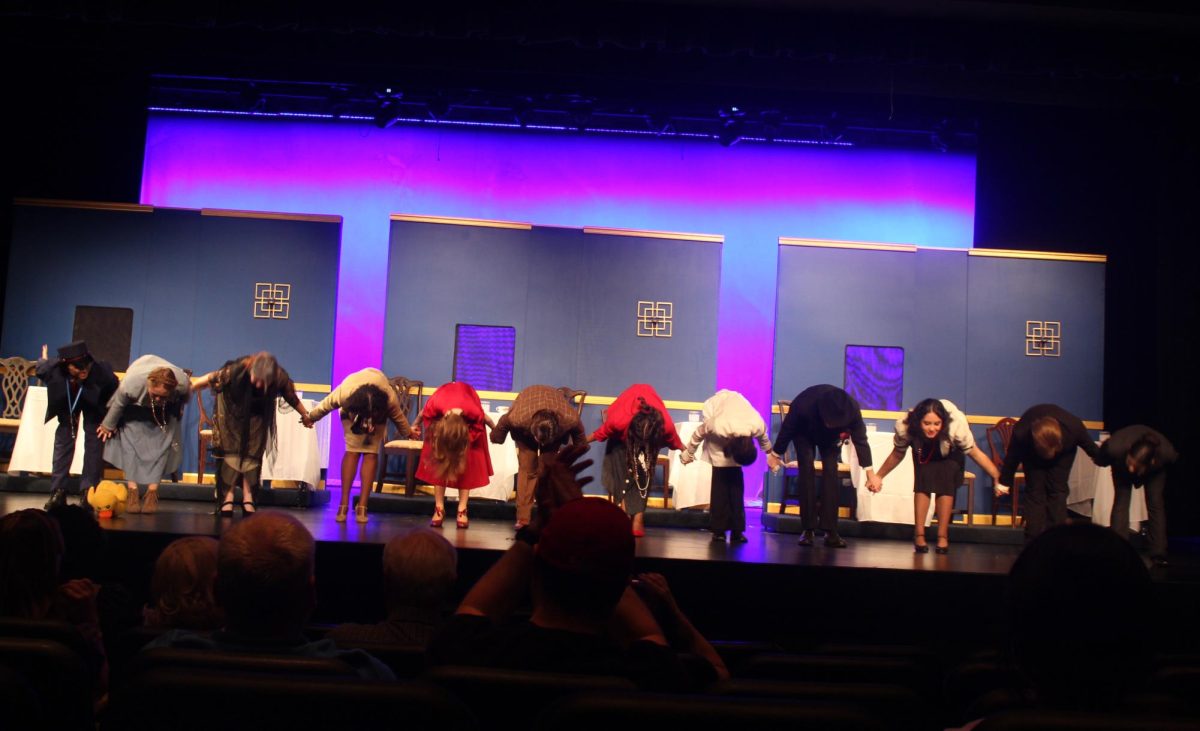
Along with the outstanding performances from the actors, the set was what really pulled everything together. Mesmerizing lighting and dramatic effects gave the show emotion with visual aid. Additionally, using wagon carts allowed the set to move during transitions, and displayed the entire process to the audience.
Audience member and West Ranch freshman Christine Stayt shared that she enjoyed the show greatly: “I think it was really professional. Being a theater kid myself, I would say it’s really impressive.”
This peculiar set was truly a great factor to the show, however, pulling it off was not an easy feat to conquer. “We spent two days just doing drills on moving the carts. We had two full rehearsal days of, ‘What are we doing today?’ ‘We’re moving the carts.’ So that everybody can kind of get the pattern, the rhythm, the choreography of it and that probably presented the biggest challenge, is finally getting that down to a science and a system,” Spradling added.
In the end, the stage crew nailed it, giving the audience a one-of-a kind experience, and a great show.
Story line
The story in itself also plays a large part in the audience’s experience. The play began with a detective boarding his friend’s luxurious train, where they were stuck in a snowstorm. They have to wait for a team to dig them out before they can continue on their journey. The killer then strikes, murdering “Edward Ratchet”–later revealed to be John Cassetti, the killer of a young girl, Daisy Armstrong. Detective Poirot then goes on a hunt for the killer, finding suspiciously obvious clues and questioning everyone on the train, before gathering everyone to reveal the murderer. Everyone on the train was connected to Daisy in some way and, with her killer and cause of Daisy’s parent’s deaths, it was revealed that the entire group collectively killed and diverged Poirot’s suspicion on a mystery ‘second conductor’.
Hillhouse’s favorite part of the performance “is the big scene at the very end when all of the characters are together and Poirot reveals the killer. That’s just such a fun scene to do, it’s great to have everyone on stage at the same time.” The scene is an extremely suspenseful and anticipated part of the story, so why wouldn’t it be only the performer’s favorite? Stayt tells us what we were all thinking: “[the ending] was really a big plot twist at the end and it really shocked me.”
The killer is aboard the Orient Express! One of you will leave this train a murderer. Can you guess who it is?